

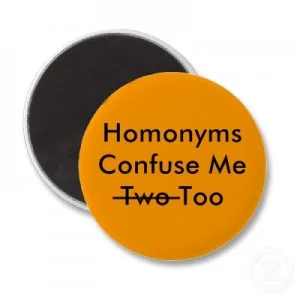
Identical twin sisters get married to two different men. And how important it is for the two ‘husbands’ to discrete their respective ‘wives’ for the discreet actions. Rings a bell? Discrete v/s Discreet? That is exactly what HOMONYMS are!
And there are hundreds of them in the English language. Here are 50 difficult homonyms with examples, meanings, and memory keys — solutions you won’t forget ever. Be it CAT, CLAT, GRE, SSC CGL, Bank PO, CSAT, NDA, GMAT, or CDS — trust me, you are all set after this.
What Are Homonyms? (Quick Definition for Competitive Exams)
Homonyms are words that sound similar or are spelled the same but have different meanings. They come in two main types:
- Homophones — same pronunciation, different spelling and meaning (e.g., accept vs except)
- Homographs — same spelling, different meaning (e.g., bank as river edge vs financial institution)
In competitive exams, homonyms appear in error-spotting, fill-in-the-blank, vocabulary, and reading comprehension sections. The trick is not to memorize definitions mechanically — it’s to build a memory key that sticks. That’s exactly what this list does.
As a Motivational Speaker, I have come to firmly believe — ‘Slow is better than Fast’ when it comes to real learning. Read a few of these every day. Do not try to mug up the entire list in one sitting. Apply them in your own sentences. Only then do they become permanent.
Quick Reference Table: All 50 Homonym Pairs at a Glance
For quick revision before exams — scan this table first, then dive into detailed explanations below:
| # | Word 1 | Word 2 | Key Difference |
|---|---|---|---|
| 1 | Adjure | Abjure | Request vs Renounce |
| 2 | Accept | Except | Receive vs Exclude |
| 3 | Ambiguous | Ambivalent | Double meaning vs Mixed feelings |
| 4 | Affect | Effect | Verb (influence) vs Noun (result) |
| 5 | Amoral | Immoral | Not moral vs Against morality |
| 6 | Allusion | Illusion | Indirect reference vs False perception |
| 7 | All Ready | Already | Prepared vs By this time |
| 8 | Altogether | All Together | Entirely vs Gathered in one place |
| 9 | Amiable | Amicable | Friendly (person) vs Peaceful (situation) |
| 10 | Apart | A Part | Separated vs Joined with |
| 11 | Ascent | Assent | Climb vs Agreement |
| 12 | Breath | Breathe | Noun (air) vs Verb (to inhale) |
| 13 | Capital | Capitol | City/funds vs Building |
| 14 | Complement | Compliment | Complete vs Praise |
| 15 | Conscience | Conscious | Sense of right/wrong vs Awake |
| 16 | Council | Counsel | Group vs To advise |
| 17 | Censure | Censor | Disapprove vs Suppress/cut |
| 18 | Climactic | Climatic | Forming climax vs Relating to climate |
| 19 | Complacent | Complaisant | Self-satisfied vs Willing to please |
| 20 | Continuous | Continual | Without interruption vs With intervals |
| 21 | Discreet | Discrete | Careful/tactful vs Separate/distinct |
| 22 | Flaunt | Flout | Show off vs Break rules |
| 23 | Forego | Forgo | Precede vs Go without |
| 24 | Ingenious | Ingenuous | Clever vs Naïve/candid |
| 25 | Loath | Loathe | Reluctant vs Greatly dislike |
| 26 | Elicit | Illicit | Draw out vs Illegal |
| 27 | Eminent | Imminent / Immanent | Famous / About to happen / Inherent |
| 28 | Its | It’s | Possessive vs It is |
| 29 | Lose | Loose | Misplace/not win vs Not tight |
| 30 | Mendacious | Mendicant | Lying vs Begging |
| 31 | Precede | Proceed | Come before vs Go forward |
| 32 | Principal | Principle | Person/important vs Fundamental truth |
| 33 | Perquisite | Prerequisite | Privilege vs Prior condition |
| 34 | Perspicuous | Perspicacious | Expresses clearly vs Understands keenly |
| 35 | Proscribe | Prescribe | Forbid vs Recommend/issue |
| 36 | Reign | Rein | Period of rule vs Harness/restrict |
| 37 | Stationary | Stationery | Standing still vs Writing materials |
| 38 | Titillate | Titivate | Excite vs Smarten up |
| 39 | Tortuous | Torturous | Twisting/complex vs Painful |
| 40 | Than | Then | Comparison vs Time/sequence |
| 41 | Their | There / They’re | Possessive / Location / They are |
| 42 | Through | Threw / Thorough / Though | Four distinct meanings — all explained below |
| 43 | To | Too / Two | Direction / Also / Number |
| 44 | Venal | Venial | Corruptible vs Pardonable |
| 45 | Veracity | Voracity | Truthfulness vs Greediness/hunger |
| 46 | Wreath | Wreathe | Flower arrangement vs To encircle |
| 47 | Cannon | Canon | Weapon vs Law/rule |
| 48 | Emigrate | Immigrate | Leave a country vs Enter a country |
| 49 | Who | That / Which | Person / Class / Object or place |
| 50 | Who | Whom | Subject vs Object |
Most Important Homonyms for Competitive Exams (SSC CGL, CAT, CLAT, Bank PO, GRE, CDS)
Before we go through all 50 in detail — here are the pairs that appear most frequently in competitive exam papers. Bookmark this section if you’re short on time:
- Affect vs Effect — appears in almost every English grammar exam
- Principal vs Principle — classic error-spotting trap
- Complement vs Compliment — high frequency in CAT, CLAT, GMAT
- Discreet vs Discrete — favourite of GRE and UPSC setters
- Elicit vs Illicit — SSC CGL and Bank PO favourite
- Eminent vs Imminent vs Immanent — the triple-threat; CLAT and GRE love this
- Prescribe vs Proscribe — appears regularly in UPSC and CAT RC
- Flaunt vs Flout — extremely common error-spotting question
- Stationary vs Stationery — appears even in SSC 10th standard exams
- Emigrate vs Immigrate — IELTS, TOEFL, GRE favourite
This 50-50 playground below contains correct definitions, Bollywood memory keys, and original examples. Trust me — a careful study of this note will put you in good stead for the English section of virtually any competitive entrance exam.
All 50 Difficult Homonyms — Detailed Explanations with Memory Keys
1. ABJURE V/S ADJURE
ADJURE – means to request earnestly.
ABJURE – means to renounce, to disown.
Memory tip: I ADJURE you to ABJURE your bad habits.
Examples:
a.) Beautiful song from Euphoria: Duniya parayi ABJURE karke aaja… sau rab di tujhe ek vaari aaja… (I ADJURE {request} you to come once).
b.) Remember those old Bollywood movies —
Actress (To Villain): Main tumse vinti karti hoon (ADJURE) usse chod do.
c.) Actress (to hero): Main tumhare bache ki maa banne wali hoon.
Hero: Nahi! Yeh mera bachha nahi hai… usse gira do (ABJURE kar do).
2. ACCEPT VS EXCEPT
ACCEPT — to receive something.
EXCEPT — to take or leave out.
Memory key: ACCEPT has an ‘A‘ — something is being Added. EXCEPT has an ‘E‘ — something is being Ejected.
Examples:
Mr. Axar Patel ACCEPTED the award for best motivational speaker. All were dressed in blue EXCEPT one.
An ideal Indian wife: can ACCEPT everything in her life EXCEPT her husband having an extramarital. 🙂
3. AMBIGUOUS VS AMBIVALENT
AMBIGUOUS — having more than one meaning; open to different interpretations.
AMBIVALENT — having mixed feelings.
Memory key: In science, Copper has two valencies — Cupric and Cuprous. That’s ambivalent.
Examples:
The tenant’s character sounded a bit AMBIGUOUS. Hence, the landlady was AMBIVALENT about renting her apartment.
4. AFFECT VS EFFECT
Affect: (verb) to influence — “The venom affected the villain.”
Effect: (noun) a result — “The effect of the nail was notorious.”
Rule: Remember the V’s — “Venom affected the Villain” = Verb. Remember the N’s — “The effect was notorious” = Noun.
Exceptions: Affect as noun = psychological mood (“She displayed a happy affect”). Effect as verb = to bring about (“He hoped to effect change”).
5. AMORAL VS IMMORAL
AMORAL — not concerned with morality. (Studying is amoral — it’s a duty, not a moral act.)
IMMORAL — not conforming to accepted standards of morality. (Cheating in exams is immoral.)
Memory key: Immoral has an ‘I‘ — I am doing something not moral.
6. ALLUSION VS ILLUSION
ALLUSION — an indirect reference. (The boyfriend made an allusion to not marrying early.)
ILLUSION — a false perception of reality. (A mirage is a type of illusion.)
Memory key: Allusion = ishara (a hint). Illusion = something that isn’t real. An illusion of an oasis is not an allusion that water is nearby.
7. ALL READY VS ALREADY
ALL READY — prepared. (Lunch was all ready when the guests arrived.)
ALREADY — by this time. (The lunch was already smelling bad when guests arrived.)
Memory key: The one with extra ‘L’ — separate it. Take the meaning of “all” and “ready” individually. You get the phrase.
Example: By the time we were ALL READY to leave for the movie, it had ALREADY started.
8. ALTOGETHER VS ALL TOGETHER
ALTOGETHER — entirely. (Altogether, the presentation was well planned.)
ALL TOGETHER — gathered in one place. (We were all together at the reunion.)
Memory key: Same logic as #7. Extra ‘L’ = separate the words. In “altogether,” the words are joined — and so is the meaning (entirely).
Example: When friends are ALL TOGETHER, it is fun ALTOGETHER.
9. AMIABLE VS AMICABLE
AMIABLE — friendly, good-natured (used for people).
AMICABLE — peaceful, harmonious (used for events or situations).
Memory key: AMIABLE = am + I + able to be friends. AMICABLE has a ‘CABLE’ — which connects to establish peace.
Example: Due to the AMIABLE nature of our new neighbors, we reached an AMICABLE settlement.
10. APART VS A PART
APART — separated. (The fence kept the dogs apart.)
A PART — joined with. (The new course was a part of the curriculum.)
Example: “Even though we are apart from each other… we are still a part of each other.” — Every Bollywood hero ever.
11. ASCENT VS ASSENT
ASCENT — climb, upward movement.
ASSENT — agreement.
Memory key: Ascent has a ‘C’ for Climb. In Assent, two S’s agree to stay together.
Example: Edmund Hillary and Tenzing Norgay assented that they would ascent Mt. Everest and conquer it together.
12. BREATH VS BREATHE
BREATH — noun, air inhaled or exhaled.
BREATHE — verb, to inhale or exhale.
Memory key: Breathe has an extra ‘E’ — zada letters, zada kaam. Hence it is a verb.
Example: Admissions are finally over. I need to breathe. Let’s go for a holiday and have a breath of fresh air.
13. CAPITAL VS CAPITOL
CAPITAL — seat of government; financial resources.
CAPITOL — the actual building where the legislative body meets.
Memory key: Capitol will always be in a Capital city. The one with an ‘O‘ is a building (round dome = O!).
Example: At the capitol, the government announced the amount of capital employed in the project.
14. COMPLEMENT VS COMPLIMENT
COMPLEMENT — something that completes.
COMPLIMENT — praise.
Memory key: Jab tak naa pade aashiq ki nazar (till he doesn’t compliment), sringaar adhura rehta hai (beauty isn’t complemented).
Example: A COMPLIMENT by the spouse COMPLEMENTS the wife’s entire look.
15. CONSCIENCE VS CONSCIOUS
CONSCIENCE — sense of right and wrong.
CONSCIOUS — awake, aware.
Memory key: SCIENCE tells us what is right and wrong — so the one with ‘science’ in it (conSCIENCE) is about right and wrong.
Example: Be CONSCIOUS of your CONSCIENCE else life will slip into unconsciousness.
16. COUNCIL VS COUNSEL
COUNCIL — a group that consults or advises.
COUNSEL — to advise; a counsellor is someone who counsels.
Memory key: COUNCIL — I am in a group. COUNSEL — I SELL advice. Like the best career counsellor in India.
17. CENSURE VS CENSOR
CENSURE — to express strong disapproval.
CENSOR — to suppress or cut unacceptable content.
Memory key: A censure makes sure you don’t repeat mistakes. A censor does scissoring — cuts the unwanted parts.
Example: Parents censured the telecast of the film because it wasn’t properly censored.
18. CLIMACTIC VS CLIMATIC
CLIMACTIC — forming a climax.
CLIMATIC — relating to climate.
Memory key: CLIMACTIC has an extra ‘C’ — for Climax.
Example: The deteriorating CLIMATIC conditions of the world may prove CLIMACTIC for life on earth.
19. COMPLACENT VS COMPLAISANT
COMPLACENT — smug and self-satisfied.
COMPLAISANT — willing to please, obliging.
Memory key: Complaisant = showing pleasant behavior. Remember SRK in Yes Boss: “Main koi aisa geet gaaon…agar tum kaho” — he is being complaisant. Same film, same SRK: “Jo bhi chahun, wo main paaon…” — that’s complacent. 🙂
20. CONTINUOUS VS CONTINUAL
CONTINUOUS — without any interruption.
CONTINUAL — happening frequently, but with intervals between.
Memory key: Continuous has ‘U’ and ‘S’ — they appear continuously in the alphabet. Continual has an ‘L’ at the end — far away, causing disruption.
21. DISCREET VS DISCRETE
DISCREET — careful not to attract attention or give offence.
DISCRETE — separate, distinct.
Memory key: In DISCREET, the two E’s are together. In DISCRETE, the ‘T’ separates them — just like the word means.
Example: Geeta and Seeta were talking DISCREETLY in class. The teacher made them sit at DISCRETE places.
22. FLAUNT VS FLOUT
FLAUNT — display ostentatiously.
FLOUT — openly disregard a rule.
Memory key: When you FLAUNT, you get a taunt. When you FLOUT, you are thrown out.
Example: The girls FLOUTED the dress code by FLAUNTING their micro minis.
23. FOREGO VS FORGO
FOREGO — to precede.
FORGO — to go without.
Memory key: Fore = before. Forgo comes from ‘forgot’ — you forgot it, so you had to go without it.
Example: Wife threatened: “Shopping can forego the movie. But I cannot forgo it today.”
24. INGENIOUS VS INGENUOUS
INGENIOUS — creatively intelligent, cleverly inventive.
INGENUOUS — candid, naive, innocent.
Memory key: Ingenious has ‘GENIUS’ in it — self-explanatory. Ingenuous = genuine. Jo saccha hai, wo ingenuous hai.
Example: Anu Malik INGENUOUSLY told the media that the song was his INGENIOUS work. As if the world is deaf.
25. LOATH VS LOATHE
LOATH — reluctant, unwilling.
LOATHE — to dislike greatly.
Example: Atharv to his mom: “I am loath to go to school and I loathe studying. There are no pretty girls in my class.” (Some things never change.)
26. ELICIT VS ILLICIT
ELICIT — to draw or bring out.
ILLICIT — illegal.
Memory key: ILLICIT has a double ‘L’. So does ILLEGAL. You can ELICIT that ILLICIT = illegal.
Example: The jailers ELICITED the truth about the ILLICIT drug racket from the drunk thug.
27. EMINENT VS IMMANENT VS IMMINENT
EMINENT — famous, respected.
IMMANENT — inherent or intrinsic.
IMMINENT — about to happen.
Memory key: Being an EMINENT composer, A.R. Rahman’s work was bound to be IMMANENT — and hence, fame became IMMINENT for him.
28. ITS VS IT’S
ITS — possessive (of or belonging to it).
IT’S — contraction for “it is.”
Memory key: The apostrophe in IT’S = the ‘I’ missing from “IT IS.” Put it back mentally and you’ll never get it wrong.
Example: Modifying Keats: “IT’S a joy forever. ITS beauty never dies.”
29. LOSE VS LOOSE
LOSE — verb, to misplace or not win.
LOOSE — adjective, not tight.
Example: If your LOOSE pants give in to gravity on stage, you might LOSE the competition. (Happened to someone. Not me.)
30. MENDACIOUS VS MENDICANT
MENDACIOUS — telling lies.
MENDICANT — begging.
Memory key: Shakira sings “hips don’t lie” — hips are not mendacious. Fakira (Shakira ka khayal mein bhai) is a beggar — mendicant.
31. PRECEDE VS PROCEED
PRECEDE — to come before.
PROCEED — to go forward.
Memory key: In PRECEDE, the ‘E’ comes before both ‘C’ and ‘D’. In PROCEED, the E’s move forward to be together.
Example: A lunch at Taj PRECEDED the function. Then we PROCEEDED towards the station.
32. PRINCIPAL VS PRINCIPLE
PRINCIPAL — adjective (most important); noun (person with authority).
PRINCIPLE — a general or fundamental truth.
Memory key: Your principAl is your pAl (friend in authority). Principle ends in -ple, like a rule.
Example: The PRINCIPAL taught us many PRINCIPLES of life worth learning.
33. PERQUISITE VS PREREQUISITE
PERQUISITE — a special privilege enjoyed due to one’s position (perks).
PREREQUISITE — something required as a prior condition.
Memory key: PERQUISITE = perks. PREREQUISITE = a requirement before you can enjoy the perks.
Example: There are many PREREQUISITES to fulfil before you can enjoy the PERQUISITES your position brings.
34. PERSPICUOUS VS PERSPICACIOUS
PERSPICUOUS — expressing things clearly.
PERSPICACIOUS — having a keen understanding; sharp in judgement.
Memory key: Picuous speaks. Picacious listens.
Example: Communication improves only when we are both perspicuous and perspicacious.
35. PROSCRIBE VS PRESCRIBE
PROSCRIBE — to forbid or condemn.
PRESCRIBE — to recommend with authority; to issue a medical prescription.
Memory key: PRO-scribe = prohibition. PRE-scribe = prescription.
Example: In his PRESCRIPTION, the oncologist PROSCRIBED the consumption of tobacco.
36. REIGN VS REIN
REIGN — the period during which an authority is in power.
REIN — harness; to restrict.
Memory key: G for Gunda. Most kings behave like goondas during their ‘reign’.
Example: Under the REIGN of the British, many REINS were put on the Indians.
37. STATIONARY VS STATIONERY
STATIONARY — standing still.
STATIONERY — writing materials (pens, paper, pencils).
Memory key: StAtionary has an ‘A’ — like A tree that stands still. StEry has an ‘E’ — like pEn and pEncil.
38. TITILLATE VS TITIVATE
TITILLATE — to excite.
TITIVATE — to adorn or smarten up.
Memory key: When women titivate, men have to wait. When men titillate, they get late.
39. TORTUOUS VS TORTUROUS
TORTUOUS — full of twists and turns; excessively complex.
TORTUROUS — characterized by pain or suffering.
Memory key: Daily soaps on Indian television — so tortuous (twisty plots) that it is torturous (painful) to watch them. Kaun kiska pati hai, kaun zinda hai — samajh hi nahi aata.
40. THAN VS THEN
THAN — used with comparisons.
THEN — at that time, or next in sequence.
Example: GF to BF: “If you promise to love me more THAN before, THEN only I will come back to you.” BF said: “Then let it be.” (Wrong answer.)
41. THEIR, THERE AND THEY’RE
THEIR — possessive form of they.
THERE — indicates location (think: “here and there”).
THEY’RE — contraction for “they are.”
Memory key: THEIR / THERE / THEY’RE = unka / wahan / wo log.
42. THROUGH, THREW, THOROUGH AND THOUGH
THROUGH — by means of; finished; into or out of.
THREW — past tense of throw.
THOROUGH — careful or complete.
THOUGH — however; nevertheless.
Combined example: THOUGH both were THOROUGH with their preparation, when they were THROUGH with the exam, they THREW away their hopes of a distinction.
43. TO, TOO AND TWO
TO — toward.
TOO — also, or excessively.
TWO — the number.
Memory key: The TWO of them went TO the last restaurant they could think of. Alas, it was closed TOO. It was TWO in the morning — papaji ka hotel hai kya!
44. VENAL VS VENIAL
VENAL — susceptible to bribery, corruptible.
VENIAL — pardonable (venial sin, in Christian theology, is forgivable).
Example: Being venal is not a venial crime under the court of law. Bhrashtachar maafi ke layak nahi hai.
45. VERACITY VS VORACITY
VERACITY — truthfulness, accuracy.
VORACITY — being voracious; consuming huge quantities.
Memory key: VERACITY can be verified. VORACITY — think VORA-ha mota. 🙂
Example: With VERACITY I can say that if his VORACITY is not checked, he will cross all limits of obesity sooner or later.
46. WREATH VS WREATHE
WREATH (no ‘e’) — an arrangement of flowers.
WREATHE (with ‘e’) — to envelop, surround, or encircle.
Memory key: WREATHE has an ‘E‘ at the end — it stands for Encircle.
47. CANNON AND CANON
CANNON — a large weapon (guns, howitzers, mortars).
CANON — a law, rule, or code.
Memory key: If you CAN follow CANON, it would be fine. If you CANNOT — face the CANNON.
48. EMIGRATE AND IMMIGRATE
EMIGRATE — to leave one country to settle in another.
IMMIGRATE — to come into a country to reside permanently.
Memory key: Replace E with EX (going out = EXPORT = EMIGRATE). Replace I with IM (coming in = IMPORT = IMMIGRATE).
Example: He EMIGRATED from India. My neighbor is an American IMMIGRANT.
49. WHO, THAT AND WHICH
WHO — when individual person or individuality of a group is implied.
THAT — when a class, type or species is implied.
WHICH — when referring to places, objects, and animals.
“That” introduces essential clauses. “Which” introduces nonessential clauses (and takes a comma before it).
Example:
I do not like Hindi movies that are copies of English movies. (Essential — specifies which movies.)
I do not like Hindi movies, which are copies of English movies. (Suggests all Hindi movies are copies — different meaning entirely!)
50. WHO VS WHOM
WHO — subject (does the action).
WHOM — object (receives the action).
Memory key — HE/HIM method:
HE = WHO. HIM = WHOM.
If the answer is “HE wrote the letter” → use WHO.
If the answer is “She met HIM” → use WHOM.
Examples:
Katrina consulted an astrologer WHOM she met at Chandigarh. (She met HIM → WHOM.)
Priyanka is the girl WHO got the job. (SHE got the job → WHO.)
Practice MCQs: Homonyms for Competitive Exams
Test yourself before the real exam does. Choose the correct word:
- The scientist hoped to ______ change in the education system. (effect / affect)
- The ______ conditions of the hill station made the drive adventurous. (climactic / climatic)
- She was ______ to accept his offer, though she did not ______ him. (loath / loathe / loath / loathe)
- Under the ______ of the British, strict ______ were placed on Indian trade. (reign / reins)
- The police ______ the truth about the ______ activities from the accused. (elicited / illicit)
Answers: 1. effect 2. climatic 3. loath / loathe 4. reign / reins 5. elicited / illicit
Did you like these homonyms with examples and sentences? I have a whole bunch of such posts on English and communication — read them all HERE. Together, they will cover all your needs for CAT, CLAT, CSAT, NDA, GMAT, GRE, SSC, Bank PO, and more. Whether you need WAT practice, UPSC essay prep, AWA for GMAT, Analytical Writing for GRE, or SOP writing for foreign university applications — they will help.
This list of 50 difficult homonyms? A child’s play — if you don’t see it as 50. As I said, take time. Maybe over 10 days. Once you build your own memory keys, you will never forget them. That’s my guarantee.
Rise & Shine!
FAQ: Homonyms — Questions Answered for Exam Preparation
What are homonyms with 10 examples?
Homonyms are words that sound similar or are spelled the same but have different meanings. Ten common examples: Accept/Except, Affect/Effect, Principal/Principle, Complement/Compliment, Conscience/Conscious, Stationary/Stationery, Elicit/Illicit, Flaunt/Flout, Precede/Proceed, and Discreet/Discrete. All 50 pairs with detailed examples and memory keys are covered above.
What are 20 examples of homonyms with sentences?
The Quick Reference Table at the top of this post lists all 50 homonym pairs with their core difference in one line each — making it easy to scan any 20 (or 30, or all 50) with their meanings. For full sentences and memory keys, scroll to the detailed section above.
Which homonyms are most important for SSC CGL and competitive exams?
The highest-frequency homonyms in SSC CGL, CAT, CLAT, Bank PO, and GRE include: Affect/Effect, Flaunt/Flout, Elicit/Illicit, Principal/Principle, Discreet/Discrete, Eminent/Imminent/Immanent, Prescribe/Proscribe, Complement/Compliment, Stationary/Stationery, and Emigrate/Immigrate. A dedicated section for exam-priority pairs is included above.
What is the difference between homonyms, homophones, and homographs?
Homophones sound the same but have different spellings and meanings (e.g., accept/except). Homographs are spelled the same but have different meanings, sometimes different pronunciations (e.g., lead the metal vs lead the verb). Homonyms is the umbrella term covering both — words that either sound the same or are spelled the same but differ in meaning. In competitive exams, all three types appear in vocabulary and error-spotting sections.
What are difficult or hard homonyms that trick students?
The trickiest homonyms include: Perspicuous/Perspicacious (both relate to clarity but from different angles), Venal/Venial (both suggest moral weakness but differently), Tortuous/Torturous (one twist in letters, completely different meaning), Mendacious/Mendicant, and Forego/Forgo. These appear frequently in GRE, GMAT, and CLAT specifically. All are explained with memory keys above.
How do I remember homonyms easily without mugging them up?
The single best method is building a memory key — a rhyme, a Bollywood reference, a visual trick, or a grammatical pattern that ties the word to its meaning permanently. For example: “When you FLAUNT, you get a taunt. When you FLOUT, you are thrown out.” Every pair in this list has a memory key specifically built to stick. Read 5 per day for 10 days — don’t try to absorb all 50 at once.


